
Meralgia paresthetica is a condition that causes numbness, tingling, or burning pain in the outer thigh. It is also known as Bernhardt-Roth syndrome. It occurs as a result of nerve compression. The condition most commonly affects people in middle age, and women more than men. However, it can occur at any age. Physical therapists help people safely and effectively manage the symptoms, and some causes, of meralgia paresthetica.
Physical therapists are movement experts. They improve quality of life through hands-on care, patient education, and prescribed movement. You can contact a physical therapist directly for an evaluation. To find a physical therapist in your area, visit Find a PT.
Meralgia paresthetica occurs when the lateral femoral cutaneous nerve gets compressed. This nerve is long and stretches from the spine through the groin and into the upper thigh. Abnormal pressure at any point along the nerve can cause symptoms.
This nerve provides feeling to the outside part of the thigh. It does not aid in leg movement. If the nerve becomes compressed and irritated, your outer thigh may have:
The most common causes of meralgia paresthetica are linked to increased pressure in the groin area. They include:
Other causes can include:
A person with meralgia paresthetica may experience:
Pain is often worse with standing or walking and improves with sitting.
Physical therapists and doctors diagnose meralgia paresthetica based your health history and a physical exam. Further tests are rarely needed. Diagnostic imaging tests, such as X-ray or MRI, are not used to diagnose meralgia paresthetica. However, your doctor may use them to rule out other disorders.
Your physical therapist will review your medical history and discuss your symptoms with you. They also will ask about your daily activities, exercise habits, and the clothing or uniforms you wear often. This will help to identify any factors that may contribute to your condition.
Your physical therapist will perform a thorough physical exam of your back, hip, and leg. The goals of the initial exam are to:
Your physical therapist may watch you walk, step onto a stair, squat, or balance on one leg. They also will evaluate sensations of touch on the front, side, and back of your hip and leg to find where your symptoms are the worst.
Each case of meralgia paresthetica is different. No matter what the cause, a physical therapist can design a treatment plan to help manage your symptoms. When the condition is caused by a disorder in the hip or pelvis, your physical therapist will address those areas. Their goal is to reduce or eliminate compression on the nerve. Conservative care, such as physical therapy, has been shown to be the most effective treatment for this condition.
Your physical therapist will work with you to develop a plan specific to your needs and goals. They will select treatment strategies in any or all of the following areas:
Pain relief. Physical therapists can provide many pain-relief strategies. These can include:
Range of motion. Your back, hip joint, or surrounding muscles may have limited motion. This can cause increased pressure on the nerve. Your physical therapist may teach you self-stretching techniques. These can decrease muscle tension and help restore normal motion in the back, hip, and leg.
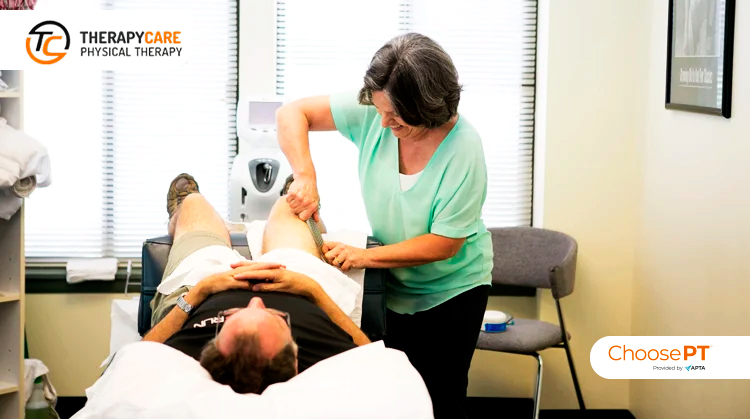
Manual therapy. Your physical therapist may apply hands-on treatments to gently move your muscles and joints. Hands-on (manual) therapy can improve movement and strength. These methods focus on areas that are difficult to treat on your own. Your physical therapist may use neural mobilization (a technique to restore movement in tissues and nerves). This treatment can help to relieve pain caused by the impinged nerve.
Muscle strength. Muscle weaknesses or imbalances linked to injury of the hip or pelvis can cause nerve compression. Your physical therapist will design a safe, progressive strengthening program for your condition. It likely will focus on your core (midsection) and lower extremities (from your hips to toes). You may begin by doing exercises lying down. You will advance to doing exercises in a standing position. Your physical therapist will choose what exercises are right for you, based on your age, symptom level, and physical condition.
Functional training. Symptoms of meralgia paresthetica are often caused or made worse by repeated movements. These motions may be required in your daily or work activities. Based on your movement assessment and goals, your physical therapist will create a series of activities to help you learn how to move your body safely.
Patient education. Your physical therapist will work with you to find and change any external factors that cause you pain. They will recommend improvements and safe alternatives to help you avoid discomfort.
Stress fractures are initially treated by resting the leg as much as possible. Stopping or modifying activities that increase stress on the legs (eg, running, jumping, or “cutting” in sports) for at least 3 weeks may be recommended to allow the bone to begin the healing process.
Based on your specific injury and condition, your physical therapist can decide whether you should use a compressive brace, crutches, or a walking boot to protect your bone while it is healing.
Initial treatment may include muscle-strengthening exercises for the lower extremities and core, stretching exercises, and alternative cardiovascular training, such as swimming or aqua aerobics. Shockwave therapy or the use of a bone stimulator may be warranted if the bone exhibits difficult or delayed healing.
During your rehabilitation, your physical therapist also can design a specific treatment program for you to follow at home to help speed your recovery.
Your physical therapist’s overall goal is to return you to your normal daily tasks at home, at work, and in the community. Without proper rehabilitation, serious problems such as chronic pain, swelling, weakness, and more severe fracture could arise, further limiting your ability to perform your usual activities.
Your physical therapist will design an individualized treatment program for you, based on your unique condition and goals. Your treatment may include:
Range-of-motion exercises. Because you have been less mobile over the past few weeks, your range of motion may have decreased. Your physical therapist will teach you how to perform safe and effective exercises to restore full movement in the joints of your legs.
Muscle-strengthening exercises. Even short-term inactivity weakens the muscles of the legs, increasing the potential for new injuries. Additionally, your stress fracture may have been related to some underlying weakness in the legs. Your physical therapist can determine which strengthening exercises are right for you based on the severity of your injury and where you are in your recovery.
Body awareness and balance training. Specialized training exercises help your muscles “learn” to respond to changes in your environment, such as uneven or unstable surfaces. When you are able to put your full weight on your foot without pain, your physical therapist may prescribe these training exercises to help you return stronger to your normal activities.
Functional training. When you can walk freely without pain, your physical therapist may begin “progressing” your treatment program to include activities that you were doing before your injury. This program will begin with slow, progressive weight-bearing activities, such as hopping and light jogging. Your physical therapist will create your own unique training program, based on your condition, your goals, and your activity levels.
Activity-specific training. Depending on the requirements of your job or the type of sport you play, you might need additional rehabilitation tailored for your job or sport. Your physical therapist can develop a program that takes into account all of these demands as well as your specific injury.
Orthotic therapy. In-shoe orthotics may be beneficial to support your return to activity with no pain as well as possibly prevent future stress fractures, if your foot posture or mechanics were a contributing factor to the development of the original stress fracture.
Education. Proper shoe selection, nutrition, training regimens, and other topics are an essential part of your rehabilitation. Your physical therapist will provide specialized education to aid in your recovery as well as in the prevention of future musculoskeletal issues.
Knowing the causes of meralgia paresthetica, and modifying them when possible, are the best ways to prevent it. In many cases, it may help to:
Cases caused by a traumatic injury are harder to prevent.
All physical therapists are prepared through education and experience to treat meralgia paresthetica. However, you may want to consider:
You can find physical therapists who have these and other credentials by using Find a PT. This tool built by the American Physical Therapy Association can help you search for physical therapists with specific clinical expertise in your area.
General tips when you’re looking for a physical therapist (or any other health care provider):